Training & Skills
Transform your career with cutting-edge courses designed for, by and with the offshore wind energy industry.
Transform your career with cutting-edge courses designed for, by and with the offshore wind energy industry.
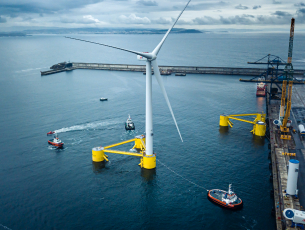
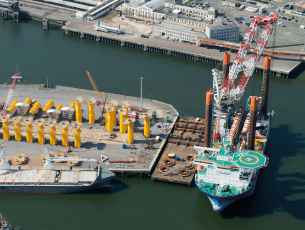
Working at the construction port for offshore wind energy involves coordinating logistics for turbine components, assisting with assembly and loading of turbine parts onto vessels, and supporting quality control and safety procedures.
It also includes helping manage inventory and supply chain operations, gaining hands-on experience with large-scale renewable energy infrastructure, and collaborating with various teams, including engineers, technicians, and vessel crews.

Development and consenting involves environmental impact assessments, navigating regulatory and planning processes, and obtaining necessary permits for offshore wind projects before construction can begin.
Tasks include conducting environmental surveys, preparing impact assessments, consulting with communities and stakeholders, and developing mitigation strategies. The role requires knowledge of environmental regulations, strong analytical skills, and the ability to balance environmental concerns with project goals.
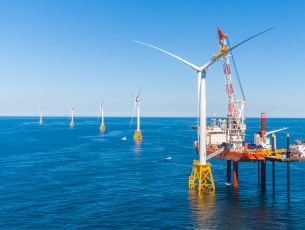
Engineering and consultancy involves providing technical expertise for wind farm design, construction, and operation.
Tasks include analysing site conditions, optimising turbine layouts, conducting environmental assessments, and ensuring regulatory compliance. The role requires strong analytical skills, knowledge of renewable energy technologies, and the ability to balance engineering challenges with environmental considerations.
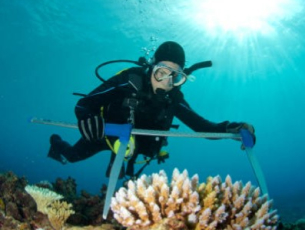
Comprehensive assessments of the marine ecosystems surrounding a development site must be conducted to determine potential impacts before planning consent can be granted, including wildlife surveys, habitat mapping, and impact studies.
Tasks include collecting and analysing data on birds, fish, marine mammals, and seabed conditions. The role requires fieldwork skills, knowledge of environmental regulations, and the ability to use advanced technologies like GIS and eDNA sampling.
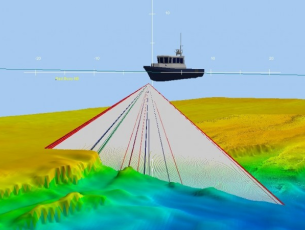
Geological and hydrological surveys involve conducting seabed assessments using advanced technologies to map seafloor topography, analyse sediment composition, and identify geological hazards of potential turbine locations and cable routes.
Tasks include operating survey equipment, processing data, and creating detailed reports to inform turbine placement and cable routing. The role requires expertise in marine geology, geophysics, and data analysis.
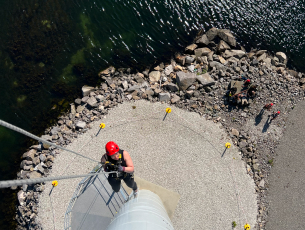
GWO training combines instructional skills with offshore wind expertise.
This involves delivering standardised safety and technical courses, teaching essential skills like first aid, fire awareness, and working at heights, providing hands-on training with wind turbine equipment and simulators, ensuring compliance with GWO standards, preparing students for careers in offshore wind farm construction and operations, staying updated on industry safety practices and regulations.
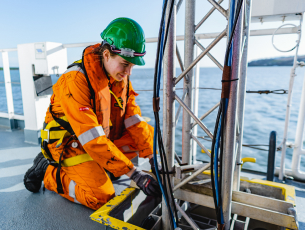
Working in higher education for OWE combines technical expertise, teaching, and advancing the field through research.
This involves conducting research on wind turbine technology, environmental impacts, and grid integration, developing and teaching courses on renewable energy systems and offshore engineering, supervising graduate students and research projects, collaborating with industry partners on innovative solutions, publishing academic papers and securing research grants, participating in conferences and knowledge exchange activities.
Curriculum Developer
Environmental Engineer
Environmental Scientist
GWO Training Instructor
Renewable Energy
Oceanographer
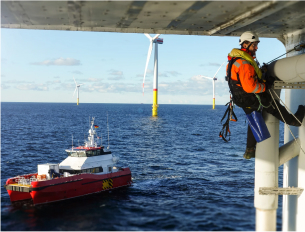
Maintenance for OWE combines technical skills, problem-solving, and adaptability to marine environments.
Tasks include conducting regular inspections and repairs on wind turbines, troubleshooting electrical and mechanical issues, operating specialised equipment and tools, working at heights and in challenging offshore conditions, ensuring safety compliance, analysing performance data, collaborating with onshore teams, travelling to offshore sites via boat or helicopter.
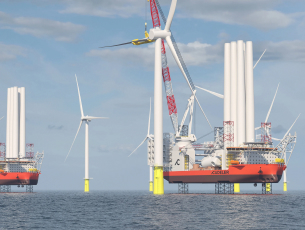
Offshore vessels and logistics for offshore wind energy involves coordinating transportation of turbine components and equipment, managing vessel operations and crew transfers, overseeing port logistics and supply chain management.
It also includes ensuring safety compliance during marine operations, planning installation and maintenance schedules, optimizing vessel utilization and route planning, collaborating with various teams including engineers, technicians, and maritime professionals.
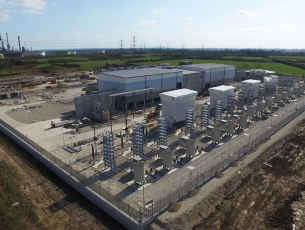
Working on the onshore substation for offshore wind energy combines electrical engineering, power systems, and renewable energy expertise.
This role involves managing the transmission of electricity from offshore wind farms to the onshore grid, monitoring and controlling electrical equipment like transformers and switchgear, ensuring safety and compliance with regulations, troubleshooting technical issues and coordinating with offshore teams and grid operators.
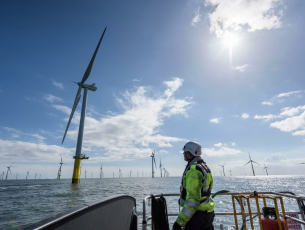
Operations for OWE combines engineering, renewable energy expertise, and hands-on technical skills.
Tasks include monitoring and maintaining wind turbines, analysing performance data, conducting repairs and preventative maintenance, ensuring safety compliance, operating specialized vessels and equipment, coordinating with onshore teams, troubleshooting technical issues, optimising energy production, adapting to challenging offshore conditions.
Working in policy for OWE combines energy policy expertise with industry knowledge and stakeholder engagement.
This involves analysing and developing policies to support the growth of offshore wind, engaging with government agencies, industry stakeholders, and environmental groups, researching market trends and regulatory frameworks, writing position papers and policy recommendations, advocating for supportive legislation and regulations, staying updated on technological and economic developments in the sector.
Environmental Advisor
Policy Analyst
Regulatory Specialist
Researcher
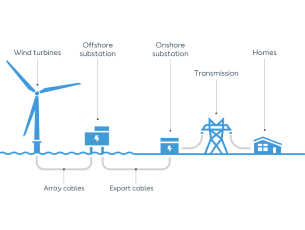
Project management involves overseeing the planning, design, and construction of wind farm projects.
Tasks include coordinating teams, managing budgets and schedules, ensuring regulatory compliance, and mitigating risks. The role requires strong leadership, communication, and problem-solving skills, as well as knowledge of wind energy technology and environmental regulations.

OWE research and development combines engineering, environmental science, and innovation to advance offshore wind technology.
This involves conducting studies on turbine design, materials, and efficiency, analysing wind patterns and environmental impacts, developing new technologies for installation and maintenance, interdisciplinary collaborations, testing innovative concepts through simulations and prototypes, staying updated on industry trends and regulations, contributing to academic publications and industry reports.
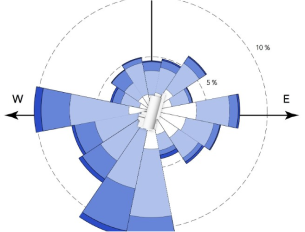
Resource and metocean assessment involves analysing wind patterns, wave conditions, and ocean currents to optimize turbine placement and design.
Tasks include deploying and maintaining measurement equipment, processing data, and creating predictive models. The role requires strong analytical skills, proficiency in meteorological and oceanographic principles, and expertise in specialized software for data analysis and visualization.
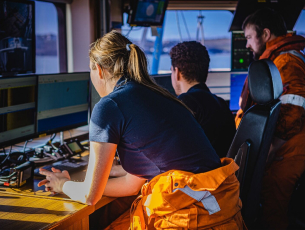
Working in vocational education for OWE combines technical expertise with teaching skills.
This involves developing practical training programs for technicians and operators, teaching hands-on skills in turbine maintenance, safety procedures, and equipment operation, creating curriculum aligned with industry standards (e.g., GWO), collaborating with industry partners for work placements, staying updated on technological advancements and safety regulations, providing career guidance and industry connections for students.
Curriculum Developer
GWO Training Instructor
Industry Partnership Coordinator
Wind Turbine Technical Trainer